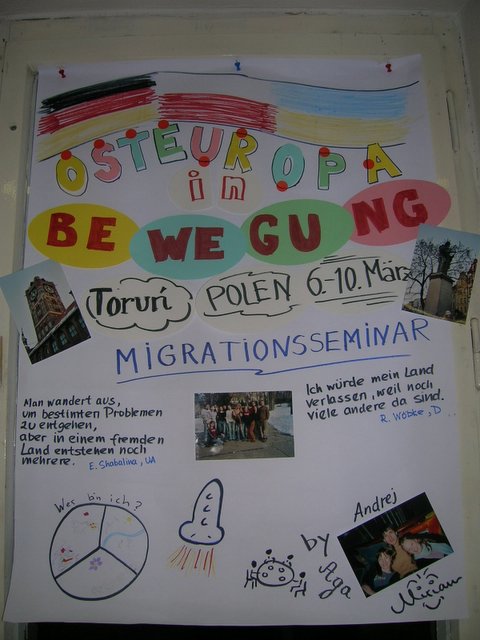
On May 29-31, 2014 the 12th International Conference "Lviv: City – Society – Culture" took place at the Ivan Franko National University of Lviv and the Center for Urban History.
The conference, dedicated to Lviv’s urban space in both its physical and symbolic dimensions, is called "Urban Spaces of Lviv/Lwów/Lemberg: Imagination, Experiences, Practices."
More informations.
Do you have enough of your branch? Look at neighbour branches and combine yours with others. Consider where you live and look for local connections. I work on history, politics, culture and even remembrance in East Central Europe. So pictures and texts here shed light on events, researches and places related to these fields in the regional context.
Pokazywanie postów oznaczonych etykietą university. Pokaż wszystkie posty
wtorek, marca 25, 2014
Urban Spaces of L'viv
Etykiety:
Center for Urban History,
city,
culture,
history,
L'viv,
memory,
memory places,
monument,
nationalismus,
remembrance,
society,
university
Lokalizacja:
Lwów, Obwód lwowski, Ukraina
wtorek, maja 01, 2012
Memory places and culture of remembrance in L'viv
Remembrance culture and memory places in L'viv are more and more interesting as a research topic.
To give the students the opportunity of researches on the topic Prof. Jürgen Angelow (University Potsdam/University of the Saarland) organised a seminar on this topic in L'viv 2007 and 2012.
The topics were divided into 6 sessions:
sobota, lipca 29, 2006
Popularisation of democratic values by the Theodor-Heuss-Kolleg
The Theodor-Heuss-Kolleg was a funding programme of Robert Bosch Foundation. This collegue supported popularisation of democratic values among young people from East Central Europe.
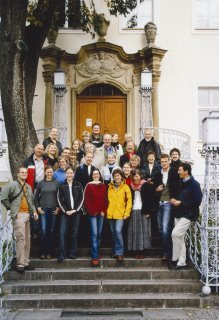
I was a member of the Theodor-Heuss-Kolleg from May 2005 till July 2006. The photos present the finish of the collegue in July 2006 in Berlin.
Etykiety:
civic,
civil society,
collegue,
democracy,
East,
East Central Europe,
Europe,
seminar,
student,
study,
Theodor Heuss,
university
Lokalizacja:
Berlin, Niemcy
History of Śląsk / Silesia
History of the borderland on example of Śląsk / Silesia is very important for Poles, Czechs and Germans.
Prof. Angelow (University Potsdam) conducted a seminar related to the history of Śląsk / Silesia from the 18th till 20th century.
Seminar group in Krasków by Świdnica
Etykiety:
18th century,
19th century,
20th century,
history,
Polish-German relationship,
seminar,
Silesia,
student,
trip,
university
Lokalizacja:
śląskie, Polska
czwartek, lipca 27, 2006
Difficult neighbourhood in Alsace and Lothringen
Relationships between France and Germany are called often as "difficult". Especially Alsace and Lothringen are the regions which caused conflicts.
So Prof. Jürgen Angelow and Prof. Bernhard Kroener (University in Potsdam) organised a seminar on the "difficult neighbourhood in Alsace and Lothringen in the 19th and 20th century". It took place at different places in Alsace and Lothringen in 2005.
I gave there a lecture about cardinal Richelieu's politics regarding other European countries.
So Prof. Jürgen Angelow and Prof. Bernhard Kroener (University in Potsdam) organised a seminar on the "difficult neighbourhood in Alsace and Lothringen in the 19th and 20th century". It took place at different places in Alsace and Lothringen in 2005.
I gave there a lecture about cardinal Richelieu's politics regarding other European countries.
Etykiety:
Alsace,
Europe,
France,
French,
German,
Germany,
Lothringen,
neighbourhood,
reflection,
relationship,
seminar,
student,
university
Lokalizacja:
Alzacja, Francja
środa, lipca 26, 2006
Bologna process in Germany, Hungary and Poland
Students from almost all European countries should be interested in analyses of studies in Europe after the Bologna process.
The Polish Ministry of Science and Higher Education publishes a number of changes which are important for universities after the Bologna process.
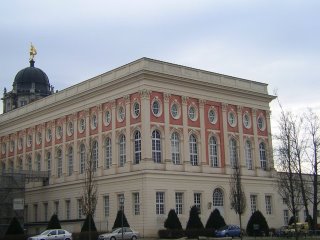
How it looks like in Germany, Hungary and Poland? Thanks to the cooperation between the Nicolaus Copernicus University, University in Göttingen and Szeged University in Hungary students of those universities could exhange their experiencies after the introduction of Bologna process at universities within a seminar.
The Polish Ministry of Science and Higher Education publishes a number of changes which are important for universities after the Bologna process.
How it looks like in Germany, Hungary and Poland? Thanks to the cooperation between the Nicolaus Copernicus University, University in Göttingen and Szeged University in Hungary students of those universities could exhange their experiencies after the introduction of Bologna process at universities within a seminar.
Etykiety:
East Central Europe,
Europe,
seminar,
student,
study,
university
Lokalizacja:
Getynga, Niemcy
piątek, maja 05, 2006
Scientific background and mentors
My scientific background is based on study of German culture and language at Nicolaus Copernicus University in Toruń 2002-2007 and history study at University of Potsdam 2007-2013.
I recommend you to go there because of many possibilities to develop your skills and interests. I took part on many excursions to different historical regions of East Central Europe and learnt to make researches on the history and culture of the region.
It all was possible only thanks to help of my mentors, Prof. Jürgen Angelow (University Potsdam), Prof. Maria Gierlak (Nikolaus-Kopernikus-University), Prof. Helmut Peitsch (University Potsdam), Prof. Włodzimierz Zientara (Nikolaus-Kopernikus-University) and Dr. Iwona Kotelnicka (Nikolaus-Kopernikus-University).
I recommend you to go there because of many possibilities to develop your skills and interests. I took part on many excursions to different historical regions of East Central Europe and learnt to make researches on the history and culture of the region.
It all was possible only thanks to help of my mentors, Prof. Jürgen Angelow (University Potsdam), Prof. Maria Gierlak (Nikolaus-Kopernikus-University), Prof. Helmut Peitsch (University Potsdam), Prof. Włodzimierz Zientara (Nikolaus-Kopernikus-University) and Dr. Iwona Kotelnicka (Nikolaus-Kopernikus-University).
Lokalizacja:
Poczdam, Niemcy
Subskrybuj:
Posty (Atom)